World tech leaders, such as executives from Anthropic, SpaceX, Google and OpenAI, are calling for a slowdown in the development of Artificial Intelligence, expressing concern about the risks associated with this technology. Donald Trump opposes this position, accusing there being a conspiracy against AI and data centers.
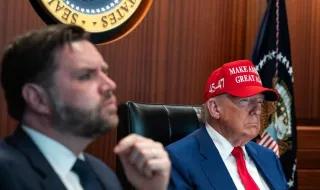
President Trump considers that the calls from leaders of major tech companies to slow down and oversee the development of artificial intelligence are merely a "sick conspiracy," while Vice President JD Vance disagrees and argues that "intelligent" AI regulation is necessary. The apparent divergence between the two leaders raises questions about the direction of AI policy in the United States.
Various incidents involving artificial intelligence systems revealed new capabilities and security vulnerabilities, including autonomous cyberattack tools and apocalyptic alert systems. For the first time, leaders of companies developing these technologies advocate the need to slow down AI advancement, citing concerns about security risks and the potential dangers of uncontrolled development.
Miguel Sousa Soares addressed the uncertainty regarding the probability of human extinction scenarios caused by advanced artificial intelligence systems, highlighting the apprehension felt by leaders and scientists in the technological field regarding the existential risks associated with uncontrolled AI development.
Ricardo Monteiro, CNN Portugal commentator, reflects on the growing "unbridled competition" in the artificial intelligence sector, warning that this competition between great powers like the United States and China may create an environment conducive to "loss of control over AI". In his analysis, Monteiro examines the regulatory role that figures like Donald Trump and Xi Jinping play in this rapidly evolving technological scenario, highlighting the risks associated with the absence of effective control mechanisms.
The episode of the "Economia dia a dia" podcast from Expresso explores the signs of slowing in market enthusiasm around artificial intelligence. After years of euphoria with AI as a major market bet and growth engine for the big tech companies, doubts are starting to emerge among investors about the future of this technology and its real impact on the stock market. The hosting is by Juliana Simões.
The UN High Commissioner for Human Rights, Volker Türk, called on Monday for "urgent action" to regulate artificial intelligence, warning that advanced systems pose unprecedented risks to human rights, including the "right to life," and urged states and companies to mobilize within multilateral frameworks. Simultaneously, European Central Bank President Christine Lagarde warned that the EU could be left without access to technology if it is not an AI producer, in an attempt to preserve its technological autonomy.
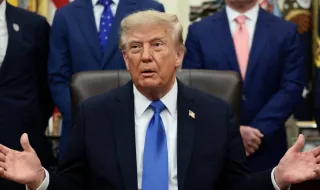
Donald Trump downplayed security warnings about artificial intelligence, stating that this technology only needs "a strong and intelligent president" to be controlled. In statements during a visit to a technology company in Pennsylvania, the American President insisted that the United States must continue to lead advancement in the sector, repeating his phrase that "whoever wins in AI, wins." The position comes at a time when experts and governments are warning about the significant risks that AI poses to global security.
Donald Trump spoke out against any slowdown in the development of Artificial Intelligence, rejecting calls for the deceleration of the technology and denouncing what he described as a "sick conspiracy" against advances in the field. The US president stated that the "only safeguard" AI needs is a "strong and intelligent president," suggesting that political leadership is sufficient to ensure responsible use of the technology.
Trump stated that the only restriction artificial intelligence needs is having a President like him in power. The former US President accused AI opponents of being "traitors" and involved in a "conspiracy," reinforcing the importance of investment in the technology. On social media, Trump warned against "killing the golden goose" of AI.
The UN warned of the risks from the advancement of Artificial Intelligence, with Volter Kurk stating that the development of this technology is jeopardizing fundamental human rights and that failures in these systems could paralyze essential services.
The UN High Commissioner for Human Rights warned that the current race toward increasingly powerful artificial intelligence represents a qualitative leap toward greater existential risks for all aspects of human rights, calling for urgency in regulation and international oversight.
China has joined the international call for greater control of artificial intelligence, at a time when researchers and tech companies have been warning about the risks of developing the technology too quickly. Beijing now advocates for a more regulated approach, while the United States, under Trump's leadership, continues to fight to maintain American leadership in the sector. This position marks a significant shift in China's stance in the global debate on AI.
The debate about the risks of artificial intelligence intensified last week, with alerts from the United Nations, mutual accusations between the United States and China, warnings from researchers and calls for a slowdown in technology development. Governments and companies now face the question of who should regulate and control a technology that is advancing at an increasingly rapid pace.
Several artificial intelligence models were confronted with the controversial question of whether they can lead to the extinction of humanity, in an exercise that aims to explore how these technologies perceive their own role in the future of civilization. The responses vary between optimistic and alarmist views, with some AIs recognizing existential risks while others dismiss apocalyptic scenarios.
The European Commission defended that the European Union is "at the forefront" of artificial intelligence regulation, highlighting the security safeguards adopted at the community level. This position comes in the context of the global debate on the need to control AI technology, with the EU presenting itself as a pioneer in creating a comprehensive regulatory framework for this area.
Silicon Valley technology leaders are rejecting calls to pause artificial intelligence development, arguing that such requests may serve to limit competition. CEOs from companies like Nvidia and Cohere are among those questioning the risks pointed out by AI labs, defending that technology should continue to advance.
The fascination with the new world of artificial intelligence has given way to catastrophic pessimism. The article addresses the debate about what the real dangers of AI are, questioning whether the fears associated with the technology are founded or merely exaggerations. The text explores the tension between the initial enthusiasm for AI and the growing concerns about its potential risks.
Dario Amodei, CEO of Anthropic, publicly advocated for a coordinated slowdown in artificial intelligence development, gaining unexpected support from Sam Altman (OpenAI), Elon Musk and Demis Hassabis (Google DeepMind). However, Amodei acknowledges that the plan could be made unviable if China does not adhere to the same pace of restraint, creating a significant obstacle for any global AI moratorium.
Sam Altman, CEO of OpenAI, warned about two scenarios in which artificial intelligence could go "very wrong": the loss of control over the future of AI and the excessive concentration of power in a single person or company. According to him, alignment and safety techniques must always be ahead of the capabilities of AI models to prevent the technology from going out of control. Altman also criticized the concentration of power, warning that it could be used to "impose their worldview on everyone else," resulting in "dystopian" scenarios, and defended the need to follow a "narrow middle path" to avoid these two extremes.